What We Do From Here: Mutual Aid in Stuck Places
I watched the news about Renee Good and Alex Pretti from my living room in Casper, Wyoming, and felt that particular kind of helplessness that comes with living in a place where nothing seems to be happening and everything feels impossible.
They were monitoring ICE activity. Unarmed American citizens with families, with kids who looked up to them, with communities who loved them, with dreams that won't be realized now. The footage shows them saying "I'm not mad at you" and "Are you okay?" No weapons. And within hours, they were labeled terrorists to justify what happened to them.
I'm in Wyoming. We don't have ICE raids making headlines here. We don't have the numbers for massive protests that shut down streets. This is still a majority red state, and sometimes it feels like screaming into a wind that just carries your voice back to you, unheard. So what do we do? Those of us watching from places where it feels like we can't do anything— what's our role in this?
Because I refuse to believe the answer is "nothing."
The Narrative Problem
Here's what gets me: the discrepancy between what officials say happened and what video evidence shows. The way "self-defense" gets deployed as a shield against accountability, even when witness testimony and footage tell a completely different story. We've seen this before, the narratives that get constructed around violence, who gets labeled a threat and who gets labeled a hero.
Kyle Rittenhouse crossed state lines with a weapon and became a conservative icon.
Renee Good and Alex Pretti were unarmed monitors and got labeled terrorists. The difference isn't the actions, it lies in who's holding the gun and who's writing the story afterward.
This isn't new. Our nation has long lost trust in our government, and moments like this show us why. We're watching the same patterns play out; history doesn't have to repeat itself, but we keep choosing the loop. We economically and politically benefit a select few while the rest of us watch the same violence get justified with slightly different language each time.
People of color have been speaking out on these types of experiences for a very long time. Don’t get salty if you happen upon a post that sounds like “I told you so”, because frankly, we all have been. There is an ICE detention facility to house children. We have always warned that hate begets suffering to those outside the scope of that heat of their hate. Great example: the hate for trans people only harms women. No man will ever be stopped on his way into the men’s room, and questioned whether he is secretly “a female”. There were police officers posted up outside of only the women’s restroom, checking the ladies’ IDs as they entered. Hint— because this is the only legal way to check, trans women were able to secure bathroom access with a matching ID. (There’s a lot of free looking-up you can do about numerous such examples.)
Hate doesn’t work, and hateful ideologies, prejudice, don’t deserve a seat in any structure of authority.
Here's the thing I keep sitting with, the thing that feels uncomfortable but true: even the people spreading harmful ideology, even the ones I deeply disagree with, they're still human beings. Believe it or not, I consider many of them solid people. When Charlie Kirk died, someone made a comment to me about it and I actually burst into tears. I think Kirk was harmful, that he spread dangerous ideas, that he debated kids and young adults because he couldn't tolerate experienced opposition.
But he was also someone's loved one, someone who mattered to people in his life. He spoke, and was slain for it. This is NOT the America I enlisted in the Navy for.
I'm not saying this to both-sides anything or to soften what's happening. I'm saying it because the moment we accept violence against anyone as justified as “deserved”, we've already lost something essential. If we can dismiss someone's death because we disagreed with them, we've made it that much easier to accept the state doing the same thing.
That's exactly how we got here, to a place where federal agents can kill unarmed citizens and a chunk of the country shrugs, because those citizens were labeled the "right" kind of threat.
We can't fight dehumanization with more dehumanization. Not if we actually want something different on the other side of this.
What This Means for All of Us
When federal agencies like ICE and Border Patrol use lethal force in domestic cities far from any border, something fundamental has shifted. This isn't immigration enforcement anymore, it's militarized policing that can show up anywhere, justify anything, and face virtually no accountability for it.
The rapid deployment of thousands of agents under operations like "Operation Metro Surge" tells us exactly where federal priorities lie. And the silence from much of the opposition tells us something too.
This violence has seeped from the edges. We said it was an inch they'd pull into a mile, and we were gaslit for it, treated like we were overreacting. Now it's here, and the "I told you so" feels hollow because people are dead.
People have been protesting. First Trump's rhetoric, then the ICE raids, then the tariffs that dumped expenses onto us, then ICE again. Protests matter! They show solidarity, they make noise, they refuse to normalize what's happening. But in places like Wyoming, protests don't have the same weight. We don't have the numbers. We don't have the political leverage. Our state is complicit in this mess!
So when the traditional avenues feel blocked, when protests don't shift policy, when reps just keep talking, when legal battles ping-pong back and forth while nothing fundamentally changes— what do we actually do?
Here's what I keep coming back to: we build the structures that catch people when everything else fails. We practice now for what we'll need later. We stop waiting for someone else to fix this and start taking care of each other directly.
We build mutual aid.
What Mutual Aid Actually Looks Like
I know "mutual aid" can sound abstract, like another activist buzzword that doesn't translate to real life. So let me get concrete.
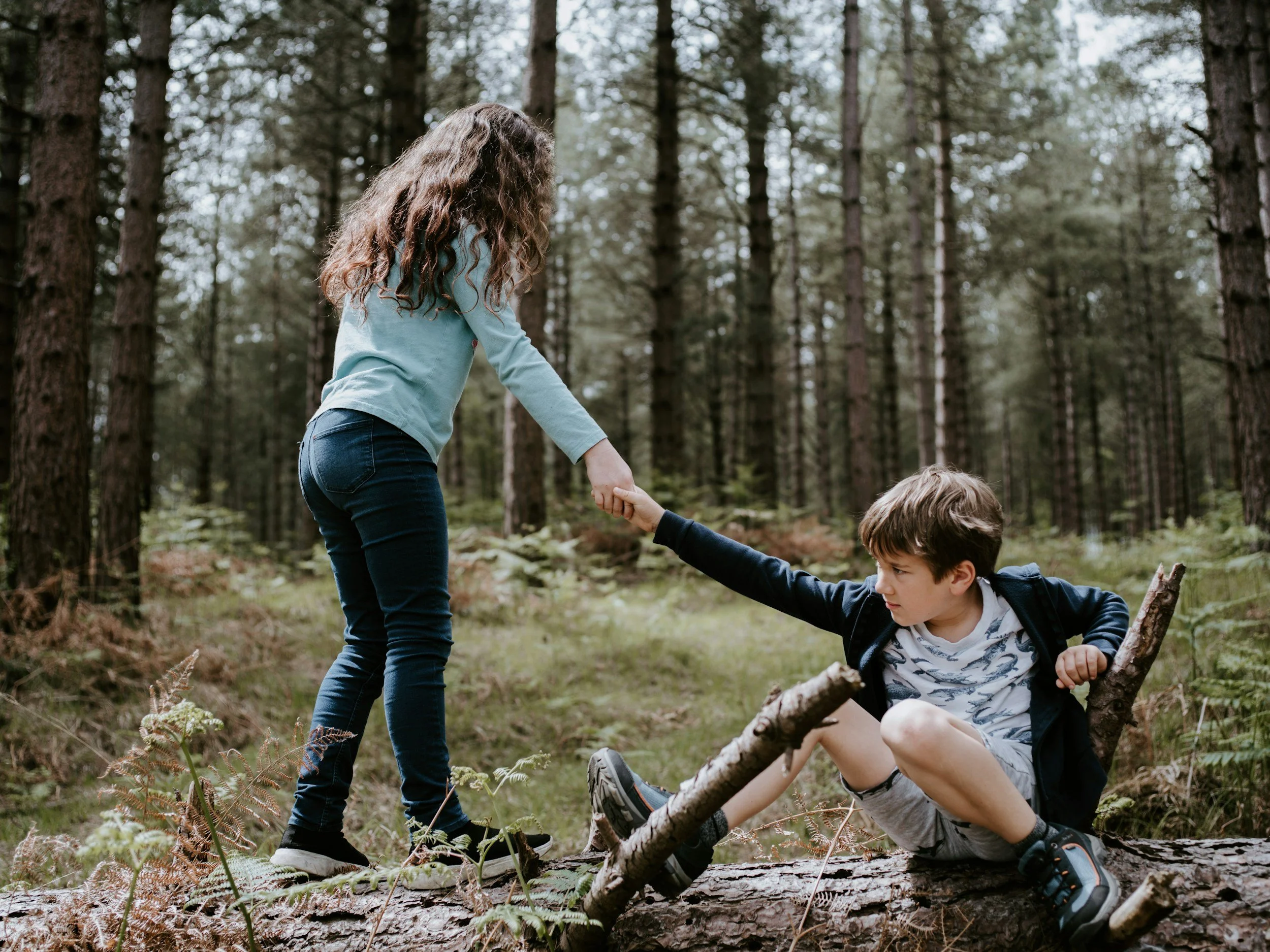
Mutual aid is people coming together to meet actual needs without waiting for institutions to do it for us. It's not charity, it's reciprocal care. It's recognizing that we were never meant to function alone, that isolation literally destroys us, and that the "rugged individualism" we've been sold is a trap that keeps us compliant and our heads down.
We've been brainwashed into believing humans should be self-sufficient, but that has never, historically, been the case. Our biology itself tells us we need other people, that we're built to work together and have roles within a community that protect and serve us all. The individualism trap is what keeps us powerless. Community is what makes us dangerous to systems that rely on our isolation.
Here's what it looks like practically:
Start or join a mutual aid group— even just a group chat where people can post what they actually need and others can step in to help. Someone needs groceries, someone else needs their bills covered this month, someone needs a ride to a doctor's appointment. You'd be surprised how quickly people show up when the ask is direct and the barrier to helping is low!
If you’re here in Wyoming with me, please check out StillGood. There’s a few counties with a chapter, and you can speak with Tori Feronti to work on opening a chapter! I believe they spoke of one chapter being in Texas as well! StillGood is a hub of community members ready to serve, and we all jump at every opportunity to step up. I am very proud to have been the type to respond to posts for food, groceries, rides, and helped people out before we even had a place where it could all go.
Watching people take care of one another in real time is bigger hopecore than you could farm off your algorithm!
Organize community meals with themes folks can contribute to; spaghetti night in a church or community kitchen where everyone brings what they have to make the dish. Maybe you've got tomato paste, someone else has noodles, someone else has ground beef. Boom! People are fed, and you've just practiced resource-sharing on a small scale. Consider dishes that don’t have a lot of complex prep.
Keep a list of people with limited mobility or outside access. If power goes out, if things escalate, if we lose internet access— you know who to check on and make sure they're safe and have what they need!
This matters for general strikes too. You can't ask people to stop working if they can't pay rent. Work and money are weaponized to keep people compliant. A national general strike doesn't stop companies from demanding their monthly bills. We have to come together to fill the gaps, to meet the need. Food, shelter, and bills all need to be covered. It's not hard to set up, but it requires us to actually practice solidarity instead of just talking about it.
And here's the thing about being in places like Wyoming: we can test things. We can experiment with mutual aid structures that might help other networks in other places. We're small enough to be nimble, connected enough to make something work. We might not be able to stop ICE raids in Chicago from here, but we can build the networks that will matter when this comes here, or when people fleeing those raids need support. We can be ready!
What We Do From Here
I don't have all the answers. I'm sitting in Wyoming trying to figure out what power looks like from a place that feels powerless, what action looks like when the traditional avenues seem blocked. I've been asking people on the ground in other places and they don't always answer, there's too much going on, too much chaos, too much immediate crisis to manage.
But here's what I do know: this isn't just happening in America. All over the world, people are rejecting authoritarianism. All over the world, people are saying "not this, not anymore." Evil gets louder as it dies, and right now it's deafening. But that noise is the sound of something collapsing, not something being built.
What we're building is quieter. It's the mutual aid network that keeps someone housed, the community meal that keeps someone fed, the phone tree that makes sure isolated people aren't forgotten. It's practicing solidarity in small ways now so we're ready for bigger things later.
Renee Good and Alex Pretti were people, just like you and me. They had families, communities, dreams. They showed up unarmed to bear witness, and they were killed for it. We can't bring them back. But we can refuse to let their deaths be used to justify more violence, more dehumanization, more isolation.
We can choose the other direction. We can choose each other.
Start small. Start local. Start with what you can actually do from where you are. Build the networks. Practice the solidarity. Be ready!
We're figuring this out together, slowly, imperfectly, from all our different stuck places. But we're not alone in it, and that matters more than we might realize.
You are seen and treasured.~